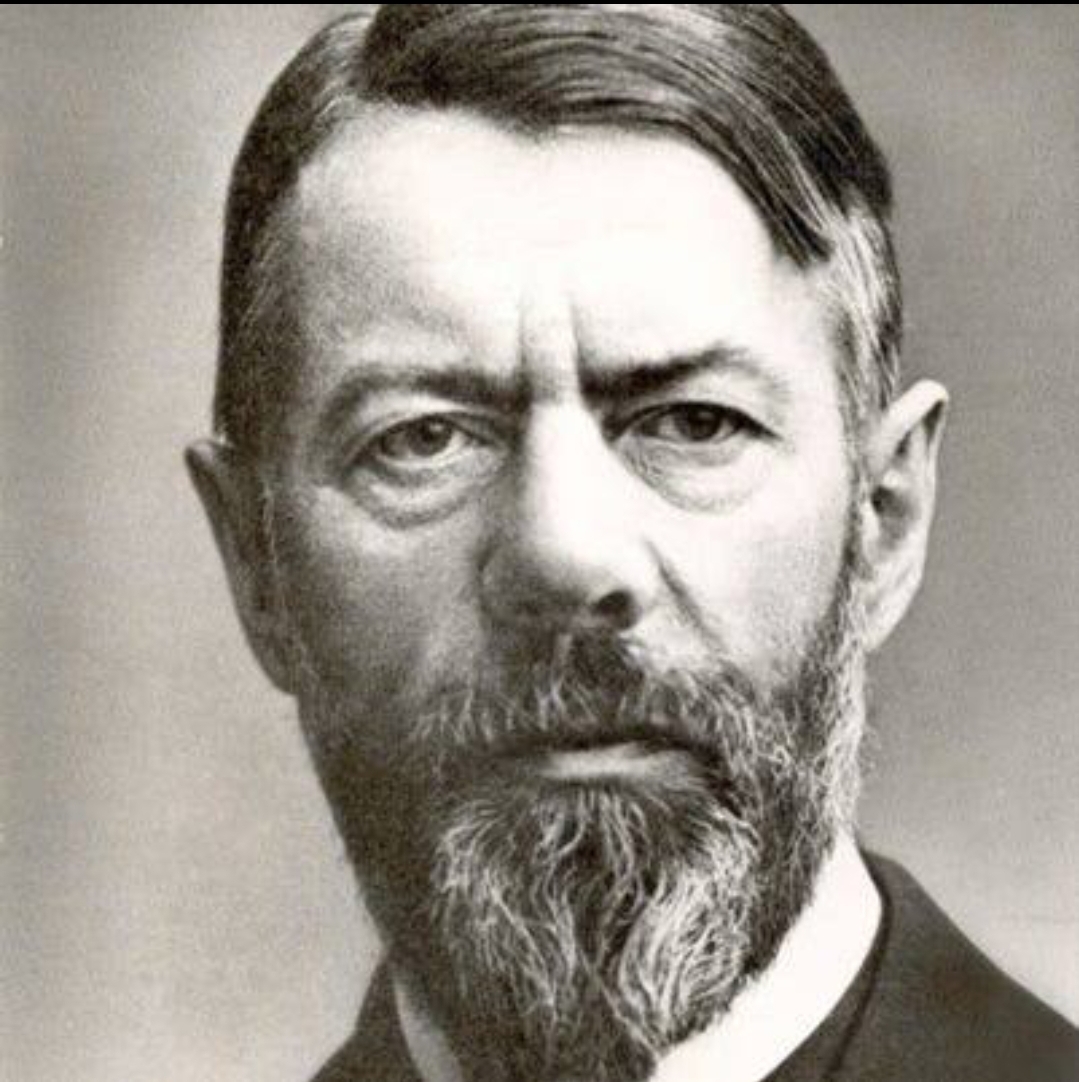
You may have heard the common formula that contrasts Max Weber as being on the right and Karl Marx on the left, but those who have actually read Weber’s famous work “The Protestant Ethic and the Spirit of Capitalism” would very well know that his arguments in many ways align with those of communists. This is because, just like what The Communist Manifesto claimed, Weber argued that capitalism ultimately destroyed regressive values and placed efficiency and productivity as the highest priorities. At that time, the dominant belief was that the Enlightenment directly led to the Industrial Revolution. However, Max Weber argued differently. He argued that it was not the Enlightenment, but religion, specifically the ethics of Protestantism… that sparked the Industrial and financial revolutions. If you think about it, during the Middle Ages, before the Industrial Revolution, making money was considered sinful. The accumulation of capital was seen as morally repugnant. This is why “Jewish” financial and intensive commercial practices were criticized, and behaviors like hoarding wealth and avoiding extravagant spending were condemned. Working as a farmer was far more “noble” than working as a merchant or a banker. Then.. Protestant groups emerged, particularly Calvinists. Calvinism’s doctrine of double predestination… that those destined for salvation would show signs of it in this life… was interpreted as a justification for commercial success. Consequently, working hard and being successful in business became religiously virtuous, while laziness or failure to earn money was seen as a sign of damnation. Even speaking to someone who failed financially was seen as improper.
To avoid this, individuals had to work harder, be more frugal, and invest more diligently. Indeed, there was a shift in values. Earning money was no longer seen as sinful, but in fact, it was given moral justification. People could now pursue wealth without guilt, using any means necessary. Weber used this logic to explain why the capitalist spirit didn’t emerge in the Oriental sphere (China), but did in the West. It also helps us understand why Enlightenment movements in places like the Russian Empire, African tribes, and India did not lead to capitalism or industrial revolutions. This interpretation aligns with what Marx argued in The Communist Manifesto… that capitalism is a necessary stage. Marx believed capitalism was essential because it would dismantle metaphysical abstractions such as morality, faith, ethnicity, love, class, and blood lineage while reducing everything to materialist scopes. Really if we think about it, Weber thoroughly explained how the spirit of capitalism broke down old cultures and elevated materialist values, and why this transformation was so significant. He was unintentionally a historical materialist.